

Your questions may be a form of faithfulness.
Honest doubt does not necessarily mean you have abandoned faith. It may mean you care too deeply about what is true to settle for answers that no longer hold.
Your Journey of Faith Result · Stage Three
You appear to be in a season of active seeking—reconsidering inherited beliefs, exploring new voices and practices, and looking for a faith spacious enough to hold your lived experience.
The Journey of Faith
Spiritual growth is rarely linear. We return to familiar questions from deeper places, carrying new experience, grief, insight, and grace. No stage is a rank, and no stage makes anyone more loved by God.
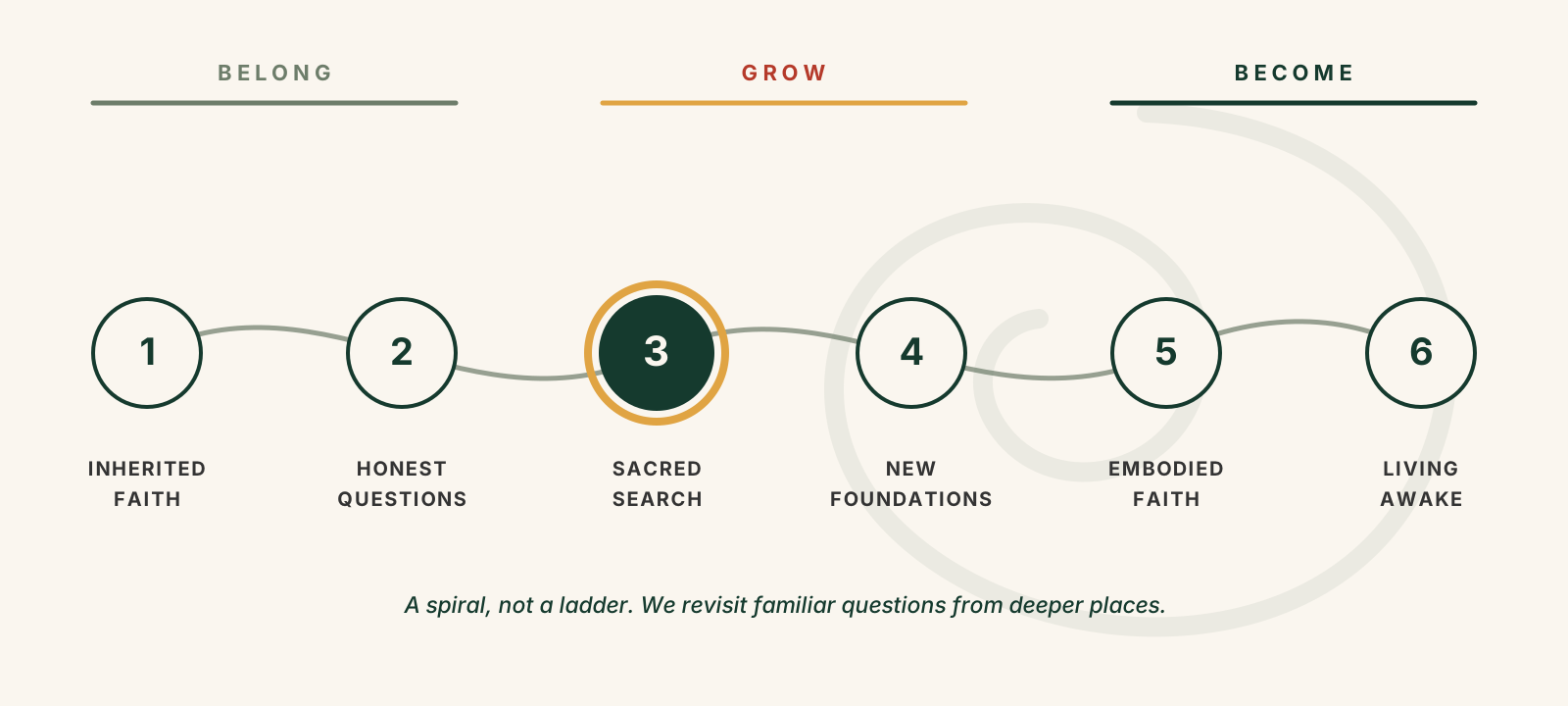
The stages describe how our relationship to faith may change—not God's relationship to us. Jesus remains at the center of the journey.
Where You Are
You are actively looking—reading, praying differently, and exploring practices and voices you were not handed. Something in you has refused tidy answers and set out to find what is real. That takes courage.
What feels like leaving faith behind may also be faith becoming more honest. The questions that once felt only painful are beginning to function as a compass. You are not trying to return to certainty. You are learning to seek God with open hands.
One common risk in this season is endless searching: moving from voice to voice without letting anything deepen. Seekers need what the internet cannot provide—companions, practices, and roots. The way of Jesus and the contemplative tradition offer a center spacious enough for real questions.

Honest doubt does not necessarily mean you have abandoned faith. It may mean you care too deeply about what is true to settle for answers that no longer hold.

The travelers on the road to Emmaus did not recognize Jesus at first—but he was walking with them the whole way.

This season can be tempted toward isolation, and it is often helped most by a table of honest people.

When belief feels unsettled, a simple rhythm of prayer and silence can keep you tethered to God, not only to your thoughts about God.
A Practice for This Season
Coming home to God, one breath at a time. Breath prayer pairs a few honest words with your breathing and lets them carry you back to God.
Let your shoulders drop. Take one slow breath and remember that you are already in God's presence. You are not summoning God—only noticing.
Pick a pair of words. Breathe the first line in and the second line out, slowly.
When your mind wanders—and it will—gently come back to the words. The wandering is not failure. The returning is the prayer.
Take your phrase into the day: one breath at a red light, in a hard moment, or before a conversation.
BREATHE IN · BREATHE OUT
Try this for seven days.
The aim is not to feel especially spiritual. It is simply to return.
Follow a short introduction and guided Breath Prayer practice.
Read, Listen & Watch
You do not need a long list. Choose the companion that meets the need most alive in you.
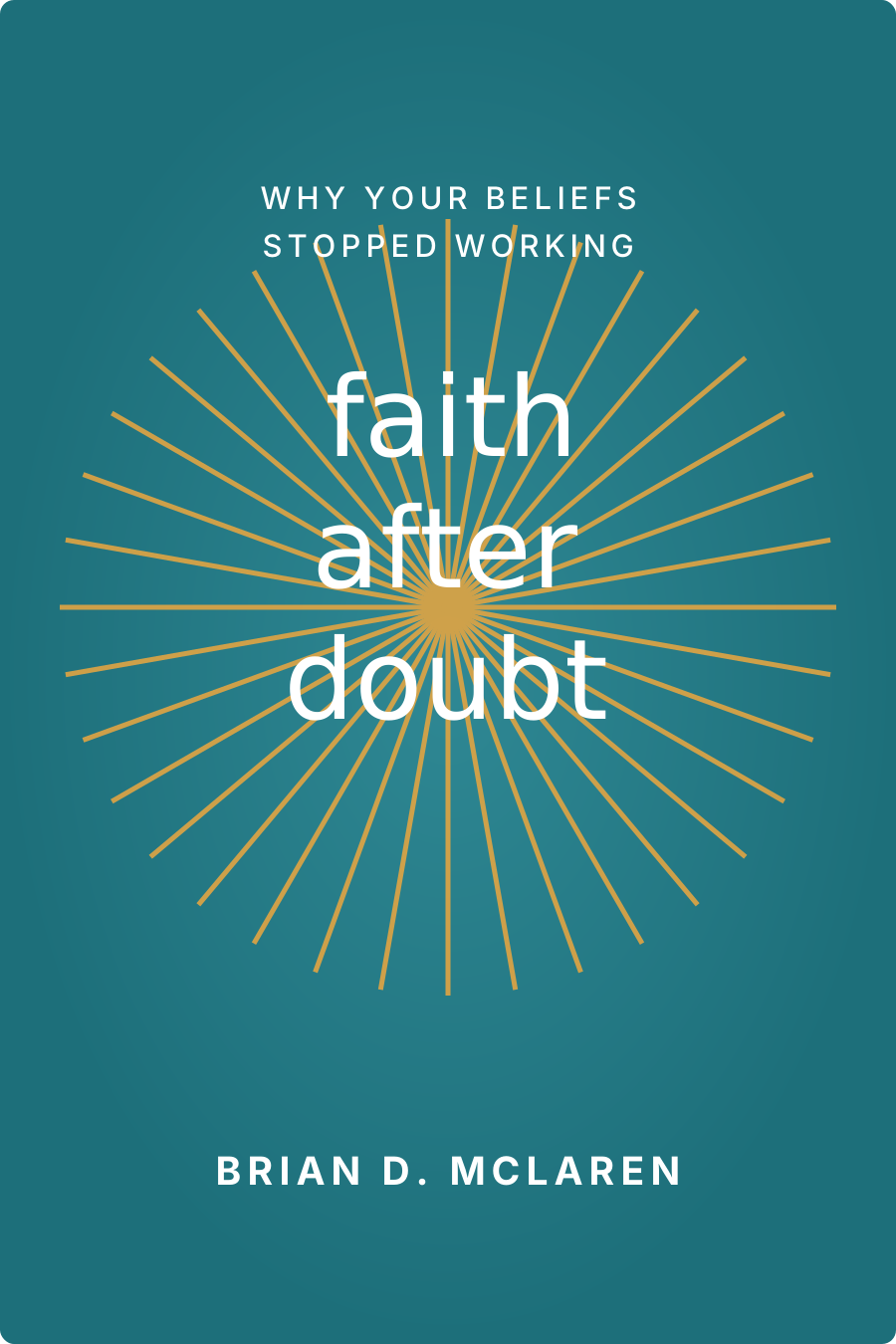
Language for why doubt can be part of growth rather than the end of faith.
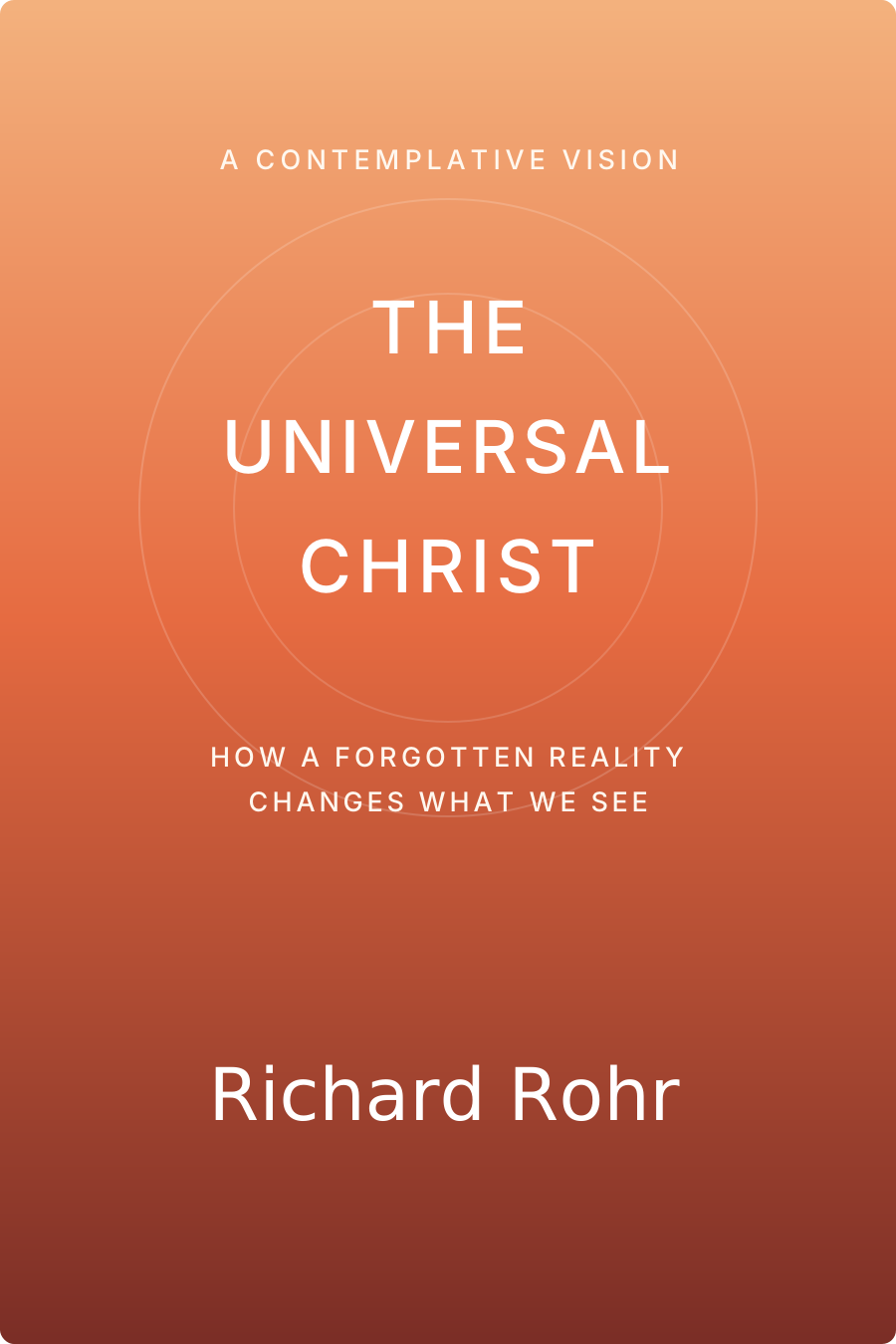
A contemplative vision of Christ revealed in Jesus and present throughout creation.
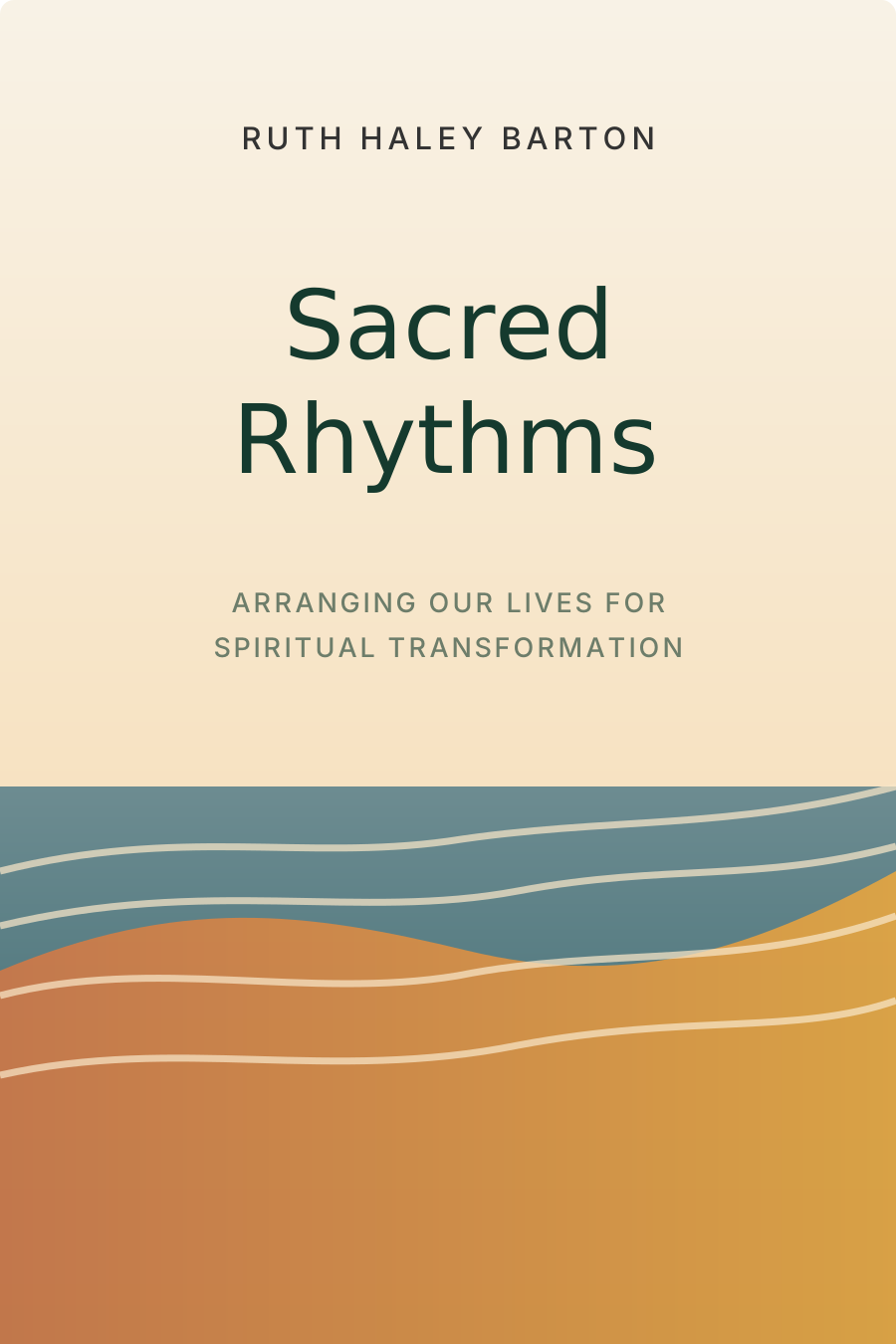
Gentle practices that help a searching heart become rooted.

Richard Rohr and the Center for Action and Contemplation.
Honest conversations about faith when life does not resolve neatly.

A short guided entry from Contemplative Outreach.

Richard Rohr introduces the vision behind the book.
The online resource page will hold live links and future additions without requiring a new PDF.
One Next Step
If one thing in this guide stirred something in you, let that become your next step—not a leap, just a step. The search deepens in good company.
Homeward Circles are small groups of six to eight who share a meal, sit with Scripture and honest conversation, practice presence, and pray.
It is not a program. It is a table—a place to keep seeking, together.